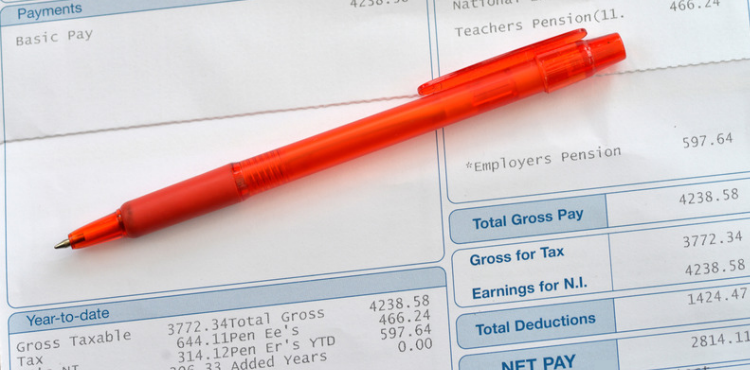
When you check your payslip, your attention probably goes straight to the numbers: your gross pay, deductions and, most importantly, how much is going into your bank account. But there’s another small detail worth checking — your tax code.
It might look like an unimportant combination of numbers and letters, but your tax code helps determine how much Income Tax is deducted from your pay. If it doesn’t accurately reflect your circumstances, you could end up paying too much or too little tax. The good news is that you don’t need to be a tax expert to understand the basics.
What is a tax code?
Your tax code tells your employer how Income Tax should be calculated through PAYE. In many cases, it reflects the amount of tax-free income you’re entitled to receive during the tax year.
HMRC is responsible for calculating and issuing your tax code based on the information it holds about your income and circumstances. Your umbrella company then uses the tax code provided through the PAYE system when processing your pay.
You can usually find your current tax code on your payslip, P60, HMRC Personal Tax Account or the HMRC app.
What does 1257L mean?
One of the most commonly seen tax codes is 1257L, which is generally used for people entitled to the standard Personal Allowance.
The numbers and letter each have a meaning:
1257 relates to the standard £12,570 Personal Allowance.
L generally indicates that you’re entitled to the standard tax-free Personal Allowance.
However, not everyone will have a 1257L tax code. Your code can be different depending on your income, other employment, benefits, previous tax adjustments and individual circumstances. That’s why you shouldn’t automatically assume your tax code is wrong simply because it looks different.
Common tax codes for contractors
There are many different tax codes used by HMRC. Here are some you may come across while contracting:
- BR
- D0 and D1
- 0T
- K codes
BR
BR means income from that employment is taxed at the basic rate of 20%, without a Personal Allowance being applied to that employment. You might see this if you have more than one job or source of PAYE income. You may also see this if HMRC hasn’t yet allocated your tax-free allowance correctly.
D0 and D1
These codes are generally used when HMRC determines that all income from a particular employment should be taxed at a higher rate.
- D0 – all income taxed at 40%
- D1 – all income taxed at 45%
These codes can sometimes be used for secondary sources of income.
0T
A 0T tax code means you aren’t receiving a Personal Allowance through that employment.
There are several reasons HMRC might issue this code, including situations where it doesn’t yet have all the information it needs to determine the appropriate tax code.
K codes
A K code means HMRC needs to take account of income or deductions that are greater than your available Personal Allowance. This could relate to things such as taxable benefits, untaxed income or tax owed from a previous year. If you receive a K code and don’t understand why, it’s worth checking the details with HMRC.
What are emergency tax codes?
When you start a new job or assignment, there may be occasions when HMRC or your new employer doesn’t yet have all the information needed to apply your tax position cumulatively. You might therefore see a tax code containing W1, M1 or X.
For example:
- 1257L W1
- 1257L M1
- 1257L X
With an emergency tax code, your tax is calculated using only your earnings and allowances for that particular pay period, rather than taking into account your income and tax paid earlier in the tax year.
This can sometimes mean you pay more tax than expected until your tax code is updated. If the code remains in place or you believe you’re paying too much tax, it’s worth checking with HMRC.
Why might your tax code change?
Your tax code isn’t necessarily fixed for the entire tax year. HMRC can update it when the information it holds about your circumstances changes.
For contractors, changes can be particularly common because you may move between assignments, umbrella companies or different ways of working.
Your tax code could change because you’ve:
- Started a new job or assignment
- Changed umbrella companies or employers
- Had more than one PAYE employment
- Received taxable benefits
- Moved between self-employment and PAYE employment
- Underpaid or overpaid tax previously
- Had changes to other sources of taxable income
Sometimes, HMRC may simply need additional or updated information before it can determine the appropriate code.
What happens if your tax code isn’t right?
Because your tax code influences how Income Tax is calculated, an incorrect or outdated code can mean you pay the wrong amount of tax. If too much tax is deducted, you may be due a refund or HMRC may adjust your tax position so the difference is corrected.
If too little tax is deducted, HMRC may need to recover the outstanding amount later. This could happen through an adjustment to your tax code or another tax calculation.
Checking your tax code can therefore help you spot potential issues sooner and reduce the likelihood of an unexpected tax adjustment later.
When should you check your tax code?
It’s a good habit to check the tax code shown on your payslip regularly, but it’s particularly worth taking another look when something changes.
For example, check your tax code when:
- You start with a new umbrella company
- You begin a new assignment
- You change jobs or employers
- You have more than one source of income
- HMRC sends you a new tax code notice
- Your take-home pay changes unexpectedly
- You notice something unfamiliar on your payslip
If you’ve recently changed employment, providing the correct starter information or P45 where required can also help ensure your payroll records are as accurate as possible.
How can I check my tax code?
Your payslip is a good place to start. Find the tax code being used and compare it with the information HMRC holds for you. You can check your tax information through your HMRC Personal Tax Account or the HMRC app, where you may also be able to see why HMRC has calculated your code in a particular way.
Think about whether anything has recently changed that could affect your tax position. Have you changed employers? Do you have another job? Have you received a new tax code notice?
If your tax code doesn’t look right or you’re unsure why it’s been applied, it’s always worth checking with HMRC to make sure it accurately reflects your circumstances.
Can my umbrella company change my tax code?
No. Your umbrella company cannot simply choose or manually change your tax code. As your employer, we process your pay using the tax code and PAYE information available to us. If HMRC issues an updated tax code through the appropriate payroll channels, we’ll apply it when processing your payroll in accordance with the instructions received.
If you believe your tax code is incorrect, HMRC is the best place to contact, as it is responsible for determining your tax code.
Understanding your payslip
Tax codes aren’t always easy to understand, particularly when you’re new to umbrella employment or have recently changed jobs or assignments. While we can’t decide what your tax code should be or change a code without the appropriate information, our team can help you understand what you’re seeing on your payslip and explain how the tax code has been applied to your pay.
If you’re concerned that your tax code doesn’t reflect your circumstances, we’ll point you in the right direction so you can check it with HMRC.