For contractors, a higher take-home pay can understandably sound attractive. But when an umbrella company promises significantly more money in your pocket by reducing the amount of Income Tax and National Insurance you pay, there is good reason to be cautious.
HMRC has repeatedly warned contractors and agency workers about arrangements that claim to legitimately increase take-home pay by disguising normal employment income as something else.
These arrangements are often marketed as sophisticated or tax-efficient solutions. You may hear phrases such as “HMRC compliant”, “tax optimised”, “legally approved” or “QC backed”.
The problem is simple: if the arrangement relies on you not paying the tax that should normally be due on your earnings, you could be participating in a tax avoidance scheme. Additionally, if HMRC later challenges that arrangement, it could be you — rather than the company that sold it to you — facing the tax bill.
How does a compliant umbrella company pay you?
A compliant umbrella company employs you and pays your salary through PAYE (Pay As You Earn). Broadly, this means your taxable employment income is subject to the appropriate deductions before your net salary reaches your bank account.
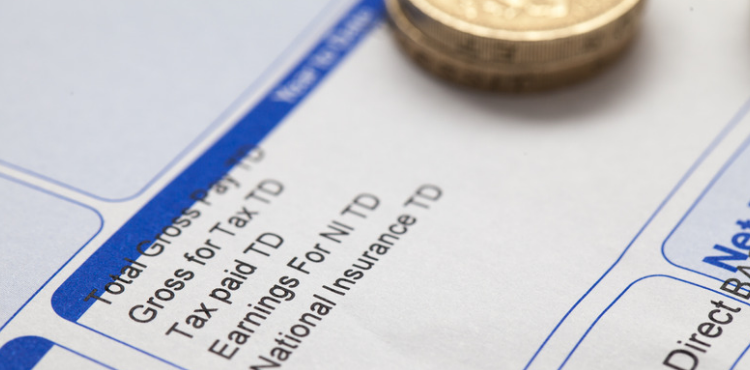
Your payslip should clearly show your gross taxable pay and relevant deductions, including:
- Income Tax
- Employee National Insurance contributions
- Any other applicable deductions
The calculation should be transparent and understandable. While different contractors will naturally have different take-home pay depending on their earnings, tax code, pension arrangements and personal circumstances, a compliant umbrella company cannot simply make legitimate PAYE liabilities disappear.
This is why you should be suspicious if one provider promises dramatically higher take-home pay than established PAYE umbrella companies for the same assignment rate.
How do umbrella tax avoidance schemes work?
Tax avoidance arrangements can be complicated, but many are based around a similar idea. Instead of treating all of your earnings as ordinary taxable employment income, the scheme attempts to convert or disguise part of your income as something else.
For example, part of your payment might be described as a:
- Loan
- Advance
- Credit facility
- Grant
- Annuity
- Capital payment
- Non-taxable payment
You might receive a relatively small amount as ordinary PAYE salary, with the remainder arriving separately under another description. The scheme promoter then claims that this second payment is not subject to the same Income Tax or National Insurance treatment. This can make the advertised take-home pay look extremely attractive.
However, changing the name given to a payment does not necessarily change its underlying tax treatment. If the money is effectively being received as a result of the work you’ve performed, HMRC may challenge an arrangement designed to avoid the tax that should otherwise have been paid.
One of the clearest warning signs is an umbrella company or payment provider promising an unusually high percentage of your contract income as take-home pay. A sales pitch might suggest that you can legitimately retain 80%, 85%, 90% or even more of your earnings.
Ask yourself, how is this provider able to produce substantially more take-home pay than a normal PAYE umbrella company? If the answer involves loans, advances, tax-free payments or complicated financial arrangements, investigate carefully before agreeing to anything. A higher net payment today isn’t necessarily a saving if HMRC later decides additional tax should have been paid.
Scheme fees
Tax avoidance schemes aren’t necessarily free. HMRC warns that promoters can charge substantial fees for providing these arrangements — in some cases 10% or more of gross income. That creates an important risk for contractors.
You could pay significant fees to participate in the arrangement, only for HMRC to later challenge it and seek the unpaid tax. In that situation, you could potentially lose twice because you’ve paid the promoter’s fees and you may still have to pay the tax.
Recovering fees from the promoter may also prove difficult, particularly if the organisation has ceased trading by the time HMRC investigates the arrangement.
“HMRC Approved” should be a major red flag
One of the most important things contractors should understand is that HMRC does not approve tax avoidance schemes. Be extremely cautious if a promoter claims its arrangement is:
- “HMRC approved”
- “HMRC compliant”
- “Approved by HMRC”
- “Registered and therefore approved”
- “Fully accepted by HMRC”
These phrases can create a false sense of security. Some tax arrangements may have to be disclosed to HMRC under the Disclosure of Tax Avoidance Schemes (DOTAS) rules and may receive a reference number. But a DOTAS reference number does not mean HMRC has approved or endorsed the arrangement. It means the arrangement has been disclosed. Those are two very different things.
Another common reassurance is that a scheme has been reviewed by lawyers, barristers or tax specialists. You might be told “our barrister has confirmed the arrangement is legal” or “that shouldn’t be treated as a guarantee of the tax outcome.”
A legal opinion may be based on specific facts and assumptions. Those circumstances may not apply to your individual situation, and an opinion obtained by somebody else is not the same as obtaining independent professional advice about your own tax affairs.
Most importantly, a legal opinion from the scheme’s adviser does not prevent HMRC from investigating or challenging the arrangement.
Who is responsible if something goes wrong?
This is perhaps the most important point for contractors. Even if someone else recommended the arrangement, you remain responsible for your own tax affairs.
If HMRC concludes that insufficient tax has been paid, the consequences can potentially include:
- Additional tax becoming payable
- Interest on tax paid late
- Potential penalties
- Professional fees if you need specialist advice
- Significant time dealing with HMRC enquiries
- Scheme fees that you may be unable to recover
And these issues may not necessarily emerge immediately. HMRC can examine earlier tax years, meaning a contractor could potentially discover years later that an arrangement they believed was legitimate is being challenged. By that point, the promoter that originally sold the scheme may be difficult to contact or may no longer exist.
Warning signs contractors should look out for
You don’t need to be a tax specialist to spot some of the common warning signs. Be particularly cautious if an umbrella company, agency or adviser:
- Promises substantially higher take-home pay than ordinary PAYE.
- Claims part of your salary doesn’t need to be taxed.
- Pays you through loans, advances, credits or other unusual arrangements.
- Makes multiple payments into your bank account for the same pay period.
- Shows only a small proportion of your earnings as taxable pay.
- Claims its scheme is “HMRC approved”.
- Uses complicated explanations for why normal tax rules supposedly don’t apply.
- Charges significant fees in return for reducing your tax liability.
- Pressures you to sign up quickly.
- Tells you that “everyone else is doing it”.
- Claims there is no possibility of HMRC challenging the arrangement.
None of these points should simply be ignored because the organisation appears professional or has an impressive website.
Check your expected take-home pay
If you’re unsure whether an arrangement looks right, compare the figures. Start by establishing approximately what your Income Tax and National Insurance deductions should look like under a normal PAYE arrangement. You can then compare this against what you’re actually receiving. If there’s a significant difference, ask why.
You should also understand the complete journey from the assignment rate through to your final net salary.
Ask for a clear explanation of:
Assignment rate > employment costs > umbrella margin > gross taxable salary > PAYE deductions >net pay.
If additional payments are being made outside that process, ask exactly what they represent and why the provider believes they aren’t taxable. A reputable umbrella company should be comfortable explaining its calculations.
Check your personal tax account
Don’t rely entirely on your payslip or what your umbrella company tells you. You can also check your HMRC Personal Tax Account to see information HMRC holds about your employment and taxable income. Compare this information with your payslips and bank payments.
If you’re receiving substantially more money than appears to be reported as taxable earnings, that’s something worth investigating.
Don’t rely on recommendations alone
Sometimes contractors are introduced to questionable schemes through people they trust. It might be another contractor who says “I’ve been using them for two years and never had a problem.” That isn’t proof that the arrangement is compliant.
The person recommending the scheme may not fully understand it themselves. In some cases, individuals can also receive referral commissions or other incentives for introducing new users.
Similarly, an employment agency or recruiter telling you to use a particular provider shouldn’t remove the need to carry out your own checks. If you’re being told that you must use an unusual payment arrangement to secure an assignment, treat that as a reason to investigate further.
Get independent advice
If you’re considering an arrangement you don’t fully understand, consider speaking to an independent, appropriately qualified accountant or tax adviser. The word independent matters. Advice from someone selling or financially benefiting from the arrangement is not the same as independent advice.
Consider checking:
- The adviser’s qualifications.
- Their relevant tax experience.
- Whether they belong to a recognised UK professional body.
- Whether that professional body has a code of conduct and complaints procedure.
- Whether the adviser has any financial relationship with the scheme being recommended.
Paying for independent advice before entering a questionable arrangement can be considerably less expensive than dealing with an HMRC investigation later.
What if you’re already using a scheme?
If you’re already being paid through an arrangement involving loans, advances or other unusual non-PAYE payments, don’t simply assume that it’s safe because you’ve been using it for some time.
Review your position. Check your payslips, bank payments and HMRC records. Establish how much of your income has actually been reported through PAYE and compare this with the total amount you’ve received.
If you’re concerned that you may have become involved in a tax avoidance arrangement, consider obtaining independent professional tax advice and contacting HMRC about your options. Ignoring the issue is unlikely to make the underlying tax risk disappear.
Don’t choose an umbrella based on take-home pay alone
When comparing umbrella companies, it’s tempting to focus on whichever provider produces the highest take-home illustration. But with a compliant PAYE umbrella, there shouldn’t be enormous differences in net pay purely because one provider has discovered a secret way to dramatically reduce your tax.
Differences can arise because of margins, pensions, tax codes and individual circumstances — but unusually large differences deserve an explanation.
A compliant umbrella company should prioritise transparent payroll, accurate PAYE deductions and clear communication, rather than promising unrealistic take-home percentages.
If you’re being promised significantly more money in your pocket because a provider has found a way to avoid normal Income Tax or National Insurance deductions, make sure you understand exactly how they’re achieving it.